
Gentle care can be a reassuring option when you are living with back pain, neck discomfort, or stiffness. Torque Release Technique (TRT) uses an instrument-assisted approach rather than a traditional manual adjustment. At Housecall Chiropractic, your visit begins with a conversation about your symptoms, goals, and what feels comfortable to you.
What is Torque Release Technique?
TRT is a chiropractic technique that uses the Integrator instrument to deliver a controlled adjustment. It is one option within a personalized chiropractic care plan. Some patients prefer an instrument-assisted approach because it does not involve the same movements as a manual adjustment.
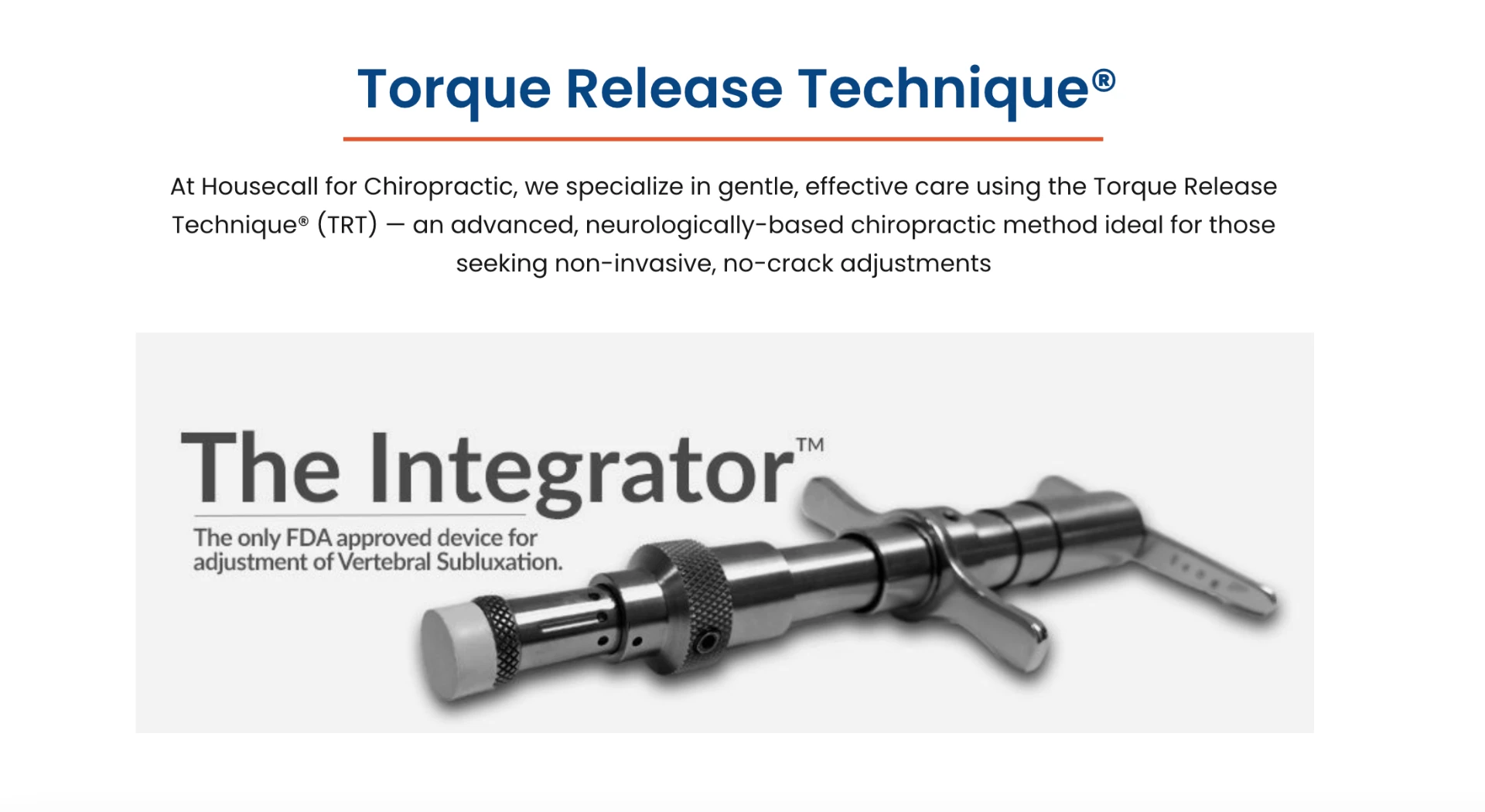
Dr. Gordon considers your health history and examination findings before recommending care. Your plan focuses on your comfort and movement goals; an instrument or technique does not guarantee a particular outcome or establish nerve repair.
What benefits may be possible?
Spinal manipulation may help some people with low-back pain and function. Benefits vary, and research does not establish that every technique is equally effective for every concern. Your care may also include movement guidance, comfortable positioning, and practical changes to daily activities.
The goal is patient-centered: helping you work toward more comfortable movement and activities that matter to you. We discuss potential benefits, risks, alternatives, and whether a medical referral is appropriate. You can choose whether to proceed.
What does an in-home visit involve?
- A discussion of symptoms, health history, and personal goals.
- An examination tailored to your needs.
- An explanation of options, including gentle instrument-assisted or manual care when appropriate.
- A plan that can be reassessed according to your response.
Chiropractic examination findings do not establish a diagnosis of peripheral nerve disease. New weakness, progressive symptoms, or other warning signs require appropriate medical assessment.
Explore gentle care at home
Meet Dr. Yale Gordon, explore chiropractic house calls, visit Housecall Chiropractic, or learn about Torque Release Technique. Call (561) 523-0089 to arrange a chiropractic appointment. The online scheduler is specifically for an in-home neuropathy evaluation.
Educational reference
For general education, not a diagnosis or a substitute for medical care. Benefits and timelines vary. Discuss concerning symptoms with an appropriate healthcare professional.